
Dark Enigma
Notes on Taoism

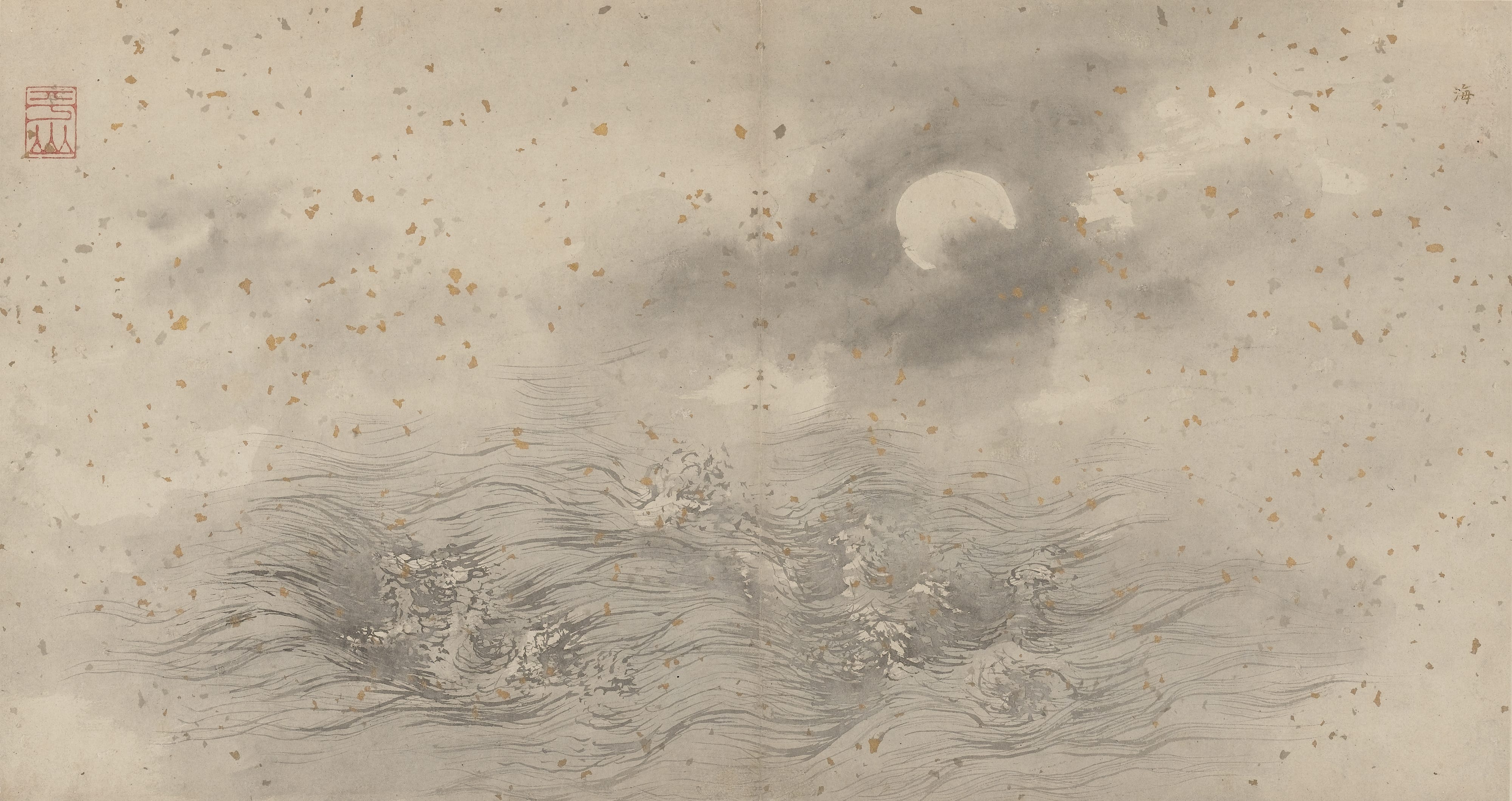
Taoism is an ancient Chinese philosophy and way of life. The Tao is the fundamental ‘Way’ of the natural world. One could call it the ground of everything. It is the great source or ‘existence-tissue’ from which everything is born and to which everything returns. The seminal text of Taoism, the Tao Te Ching, lyrically describes the Tao. Significantly, the very first line of this text reads “The tao that can be told is not the eternal Tao”. It thus warns us that the rest of the book is to be seen as a poetic evocation of the Tao, not a clear delineation – for the Tao can only be experienced in an embodied, non-conceptual way.
Unlike many spiritual traditions, which use light or white light as an image of the divine, the Tao is often described as dark, fluid and mysterious. An exquisite concept which comes from the Tao Te Ching is ‘dark-enigma’ - I love this term. Dark-enigma refers to the Tao before it is manifested in the phenomenal world, while it is still infinite potential, while it is still divine emptiness. This is the Tao before it has been thought about or directly experienced. Dark-enigma seems a perfect way of describing the Tao. The Tao is not to be grasped by the harsh light of the intellect. It is not to be cornered by reason and rationality.
I've always associated darkness and fluidity with femininity. When I think of darkness I think of moist caves, the wombs of the earth. I think of fertile soil. I think of a deep, overgrown forest. The unknown. The wildness of nature. It seems appropriate to me that the sacred Tao would also be described in this way. This is partly why I think this philosophy is so profound and beneficial. It is like a salve for us modern Westerners who have been taught to fear that which we don’t know, to fear the wildness of nature, to fear women and the feminine, to fear sacred sexuality. Such fears go deep in the Western mind. Largely, it is a fear of that which we can’t control and conceptualise, that which we think needs to be contained and subjugated.
Classical Chinese art is infused with mystery. In Chinese paintings most of the image will be a cloudy, indeterminate space from which forms, such as mountains or villages, emerge. This highlights a fundamental aspect of classical Chinese cosmology. In classical Chinese thought, existence was seen as a dance between Absence and Presence. Absence is the source of everything, the sacred potential or emptiness from which forms emerge. Presence refers to the manifestations of Absence. The indeterminate space of a Chinese painting represents Absence while the forms which grow from that space represent Presence. Similarly, the open grammar of Chinese poetry acts as Absence while the content of the poetry, the images evoked, symbolise Presence.
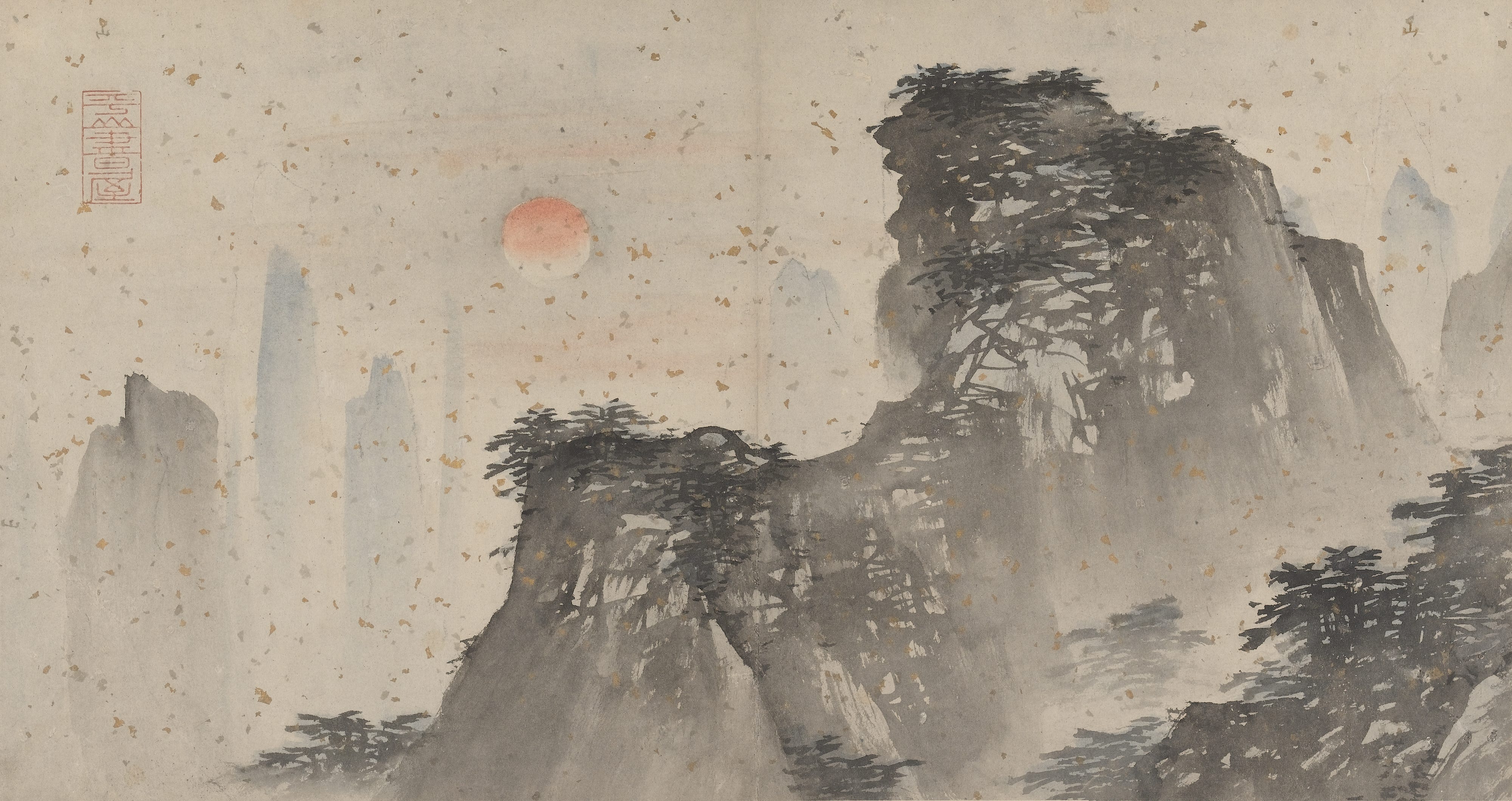
There is something dream-like about a Chinese painting or poem. Something inherently misty and indefinite. Chinese artist-intellectuals understood that to experience the world fully, it’s no use shining a harsh light on it, it’s no use trying to make it clearly defined. You have to let it speak to you. The philosopher Alan Watts writes:
“As Chinese and Japanese painters have well understood, there are some landscapes which are best viewed through half-closed eyes, mountains which are most alluring when partially veiled in mist, and waters which are most profound when the horizon is lost, and they are merged with the sky”
There is a Japanese idea called Yūgen which refers to this misty, subtle experience of beauty. Yūgen points to an experience of beauty which is vague and indeterminate. It is an experience which hints at the profundity of the cosmos and, importantly, it is associated with the natural world and the everyday (not the transcendental). Yūgen could refer to the beauty of a shoreline immersed in fog, a forest at dusk, or mountain peaks veiled in mist.
To shine a bright light on the world of nature is to impose a specific, rigid way of understanding. This inhibits us from knowing things more deeply. It inhibits us from seeing the bigger picture. But to be more receptive, to allow nature to reveal herself – this allows for a fuller, richer, more beautiful appreciation of what nature is. Watts writes: “Respect for the unknown is the attitude of those who, instead of raping nature, woo her until she gives herself. But what she gives, even then, is not the cold clarity of the surface but the warm inwardness of the body".
Other words used to evoke the Tao are non-being, emptiness and eternality. Qualities that are often thought of negatively, such as non-being, darkness and emptiness, are thus emblematic of the Tao. Emptiness gives way to form. Silence to sound. Darkness to light. Perhaps that which is often thought of negatively is that which is most primary, the infinitely fertile soil from which everything is born.
Taoism is a philosophy of receptivity, mystery and fluidity. A philosophy which values gentleness and patience. It is nuanced enough to recognise when masculine, controlling energies are needed, but guards against these energies becoming overblown. Ultimately, the world cannot be controlled or conceptualised, yet it can be felt and loved. It can be ‘moved with’, like dancing with a partner.